Opening a storefront is one task. Running a shop means connecting the product, the price, the delivery promise, and the customer's expectations. It is easy to spend a week adjusting a homepage while leaving those decisions unresolved.
This research-based guide is for a beginner preparing a small launch. It does not claim a particular revenue result or describe unprovided personal selling experience. The goal is to help you make the decisions that matter before inviting customers to order.
Start with one customer and a clear reason to buy
Write down who the product is for, what they want, and why they would choose it over an alternative. A broad category such as clothing is not yet a selling proposition. A specific style, fit, use, or point of view gives shoppers something they can recognize.
Look at competing products to understand the choices a buyer already has. Compare the full offer: product information, delivered price, delivery window, and service. Do not assume a crowded market guarantees demand for your version, or that a quiet market means you have found an opportunity.
The SBA's planning framework is useful here because it separates demand, competition, and pricing. Use those questions to shape a small initial range instead of buying a large assortment before learning what customers want.
Choose how the order will be fulfilled
Your fulfillment method affects what you can promise. Holding inventory gives you direct access to stock, but ties up cash and creates storage and packing work. Print on demand can reduce the need to hold finished products, while making the supplier's production and shipping process part of the customer experience. Handmade or made-to-order goods require a production schedule you can sustain.
Order a sample when practical. Inspect the item, packaging, and delivery experience before writing product claims. A supplier listing is a starting point for research, not proof that your own customer will receive the same result in every destination.
Calculate what remains from each order
Start with the selling price, then subtract product cost, fulfillment, packaging you pay for, payment charges, and any shipping subsidy. Advertising, returns, fixed subscriptions, taxes, and your time still need attention. Revenue is not the amount you get to keep.
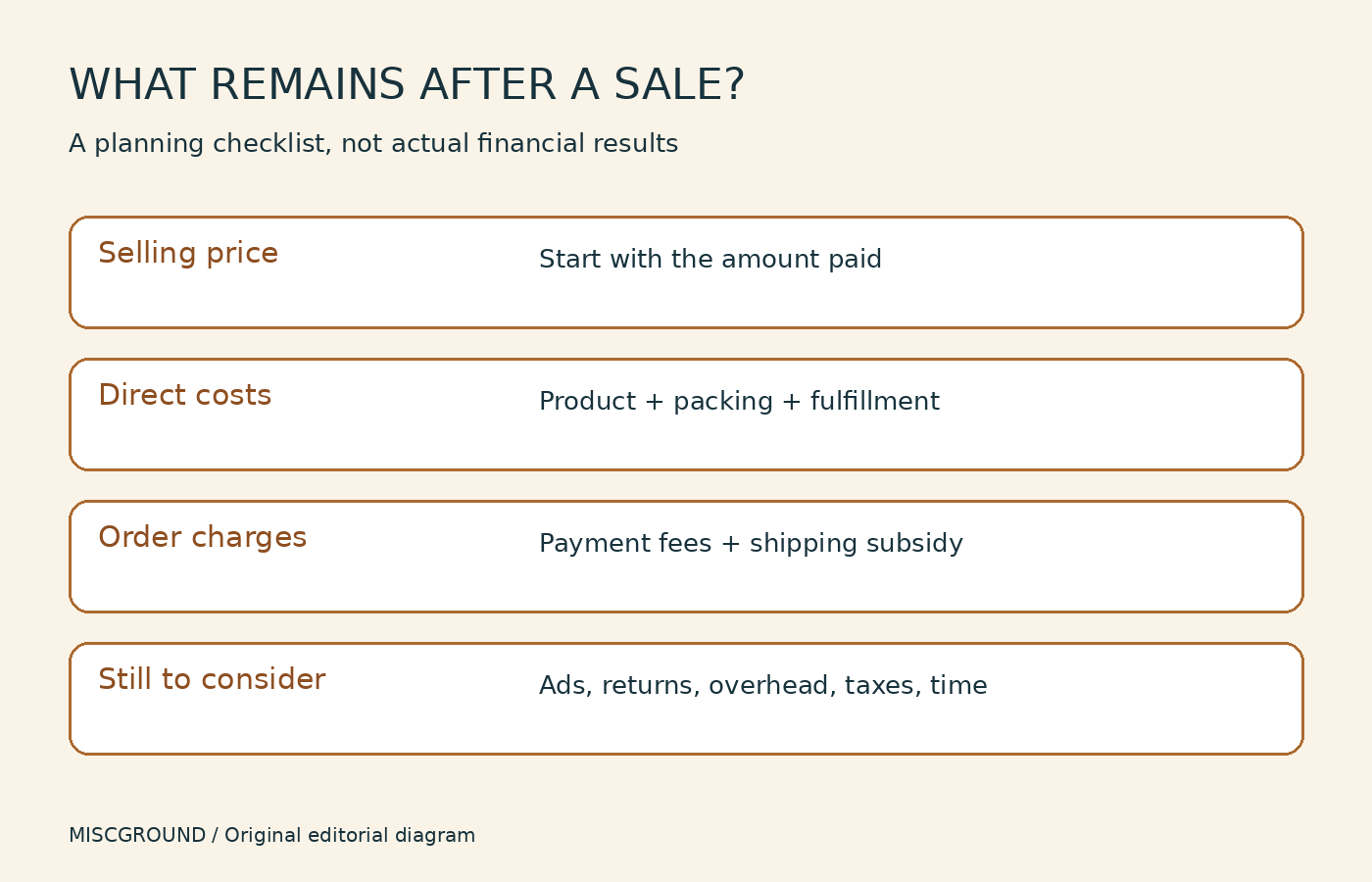
Original planning diagram; not a report of actual shop results.
Do this calculation for a realistic order, including discounts or multiple items if you plan to offer them. A promotion that increases sales can still reduce the money available to operate the shop. Get current quotes from the providers you actually intend to use; this article does not quote platform fees or shipping prices.
Give the buyer enough information to decide
A product page should answer practical questions before asking for the sale. Describe what is included, relevant dimensions or sizing, materials you can substantiate, care information, and any variation the buyer should expect. Use photographs you own or have permission to use, and label mockups where needed.
Make shipping expectations, returns, cancellation terms, and contact details easy to find. Write policies that match your process and the rules applicable to your business and customers. A copied policy can promise something you cannot deliver. Product-specific or location-specific obligations need their own review before launch.
Test a whole order, not just the homepage
Walk through the shop on a phone. Choose a variant, add it to the cart, check the totals, and follow the checkout flow. Use an available test mode and test payment details, rather than creating an accidental live charge. Confirm what the customer sees in the order confirmation and what you receive as the operator.
Also check the less convenient cases: an unavailable variant, an incorrect address, a customer asking to cancel, and an item that arrives damaged. You do not need a complicated system, but you do need a clear next step.
Launch small enough to learn
Choose an initial range that you can explain and support. There is no universal product count that makes a shop ready. A coherent small collection with accurate information is easier to learn from than a larger assortment of unfinished listings.
Pick one practical route to your first visitors. That could be a focused social presence, useful content, an existing audience, or a carefully budgeted advertising experiment. Opening an independent store does not establish a traffic forecast.
After launch, look for where people stop: finding the product, choosing a variant, understanding delivery, or completing checkout. Use actual customer questions and order outcomes to guide the next change. Your first launch should help you learn which part of the offer needs work, while keeping the promises you have already made.
Source and image note
- U.S. Small Business Administration: Plan your business — customer research and planning framework, checked November 1, 2026.
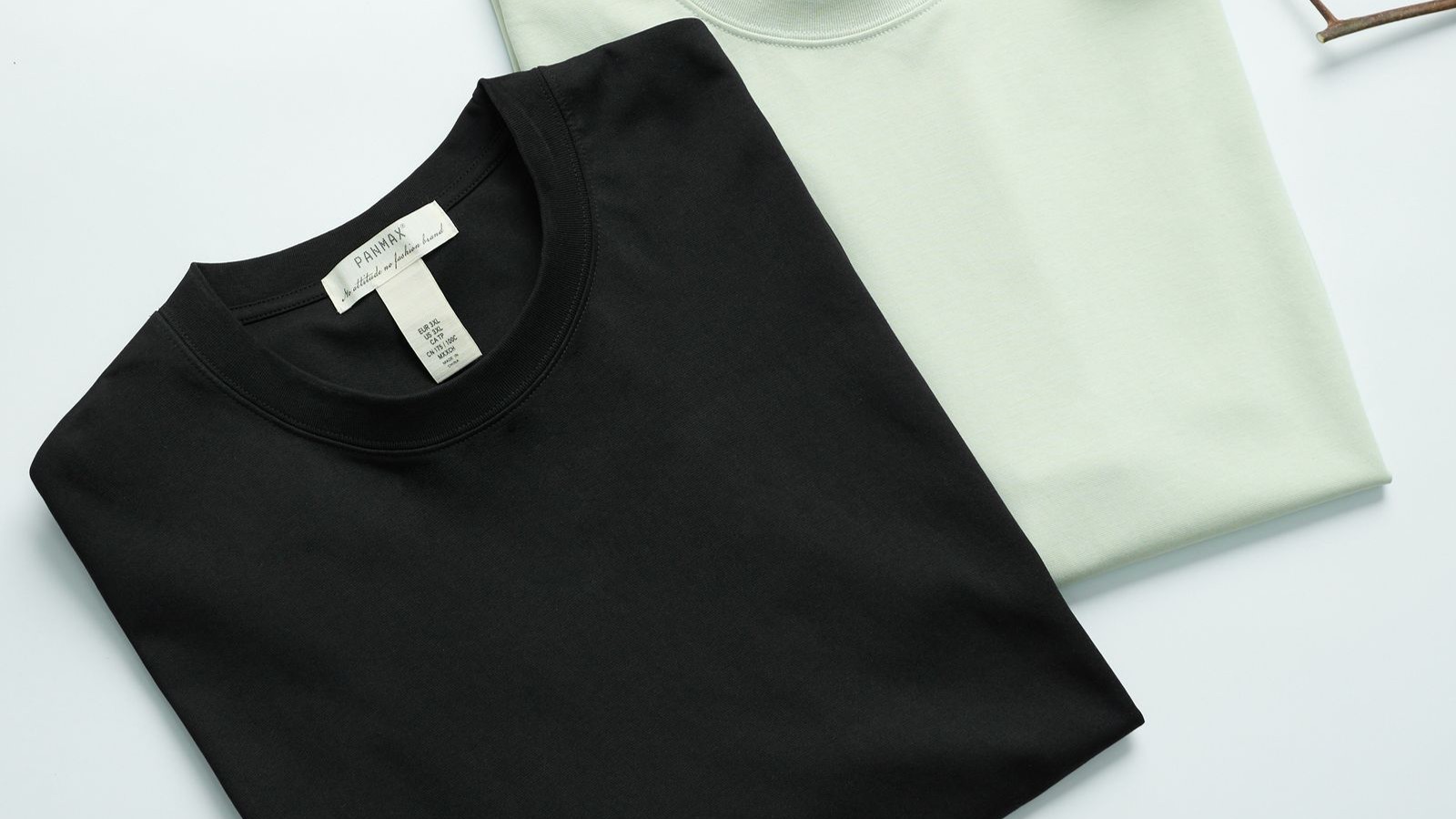
Cover photograph: Matthew Henry / Burst, used under the Burst license. It is illustrative stock photography, not the author's workspace. The body graphic is an original editorial diagram, not evidence of sales performance.