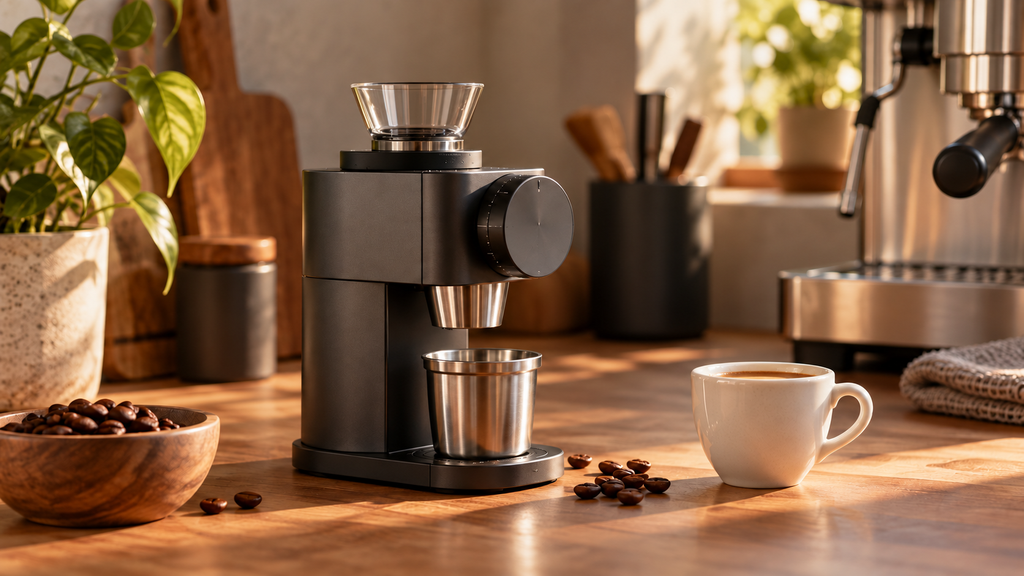
A premium grinder announcement can make familiar problems sound like they need an entirely new machine. Grounds cling to surfaces, a small amount remains inside the grinder, and a carefully weighed dose becomes less tidy on the way to the cup.
Those are useful problems to investigate. The question is whether a new grinder addresses the problem in your routine, and whether its added complexity is a trade you want to make. A longer feature list is not the same as a better morning.
Start with the dose you actually prepare
Single dosing means preparing an individual quantity of beans for a grind rather than relying on a large hopper as the everyday supply. The attraction is control over each preparation, but the full routine still includes weighing, feeding, collecting, transferring and cleaning.
Map those actions before comparing machines. If the irritating step happens after the grounds leave the grinder, a specification about the motor may not explain whether your counter will be easier to keep clean.
What the new EG-1 brings into focus
An October 22 Daily Coffee News report on the redesigned Weber Workshops EG-1 describes changes to the motor, chamber, exit path and feeding system while retaining the product's 80-millimeter flat-burr platform. The report also describes features intended to address retained grounds and static.
Those details are a useful research agenda, not independent proof of better taste or zero retained coffee. Verify the current configuration and included accessories against the manufacturer's product page before comparing offers. Specifications and availability are time-sensitive, so this article does not treat a launch price as a standing recommendation.
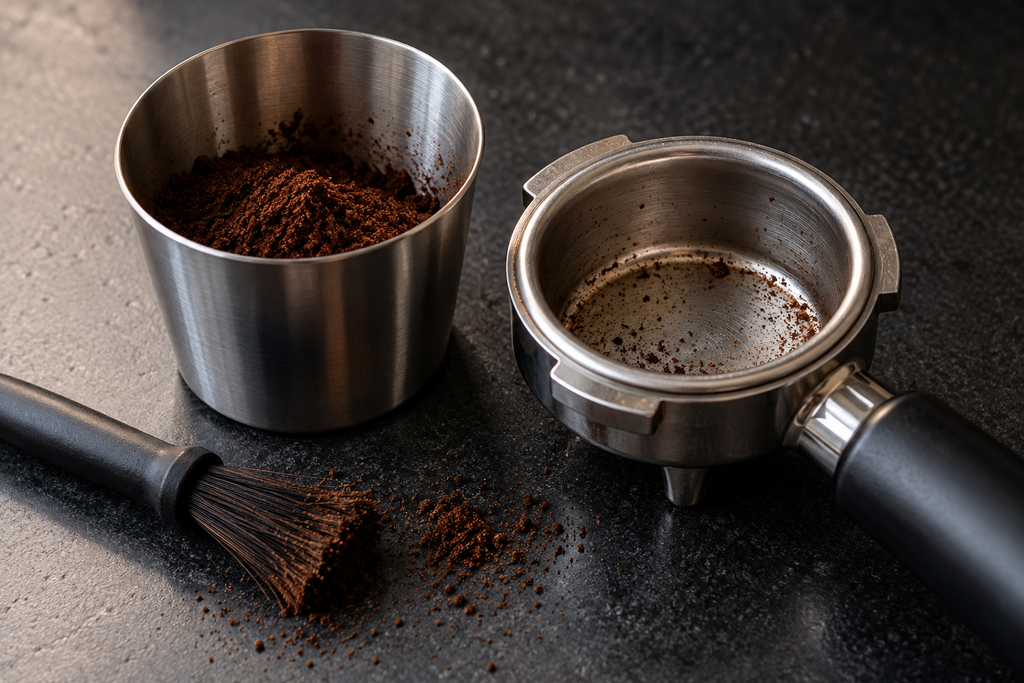
Separate retention, static and transfer mess
These problems can look similar on the counter but invite different questions:
- Retained grounds: What remains inside the grind path, and what cleaning or purge routine does the manufacturer specify?
- Static and clinging: How does the machine manage grounds adhering around the exit and collection area?
- Transfer: How easily can you move the collected grounds into your brewing setup?
- Access: Which parts can you safely remove and clean, and which require service?
Do not assume that a feature aimed at one of these problems resolves all of them. Ask for evidence tied to the exact result you care about.
Feeding is part of the process
Weber's EG-1 Bean Feeder page describes a dedicated accessory for the machine. Its existence highlights a useful distinction: the way beans enter a grinder is a separate design choice from the burr diameter.
When evaluating a setup, check whether the advertised workflow requires an optional accessory. Consider the extra attachment, the steps it introduces and how it is cleaned. An accessory can be worthwhile without being necessary for every user.
Run a practical comparison before changing equipment
If your current grinder still functions correctly, write down the problem you want to solve over several normal preparations. Note where coffee accumulates, which transfer step spills, and how long routine cleaning takes. Follow the manufacturer's instructions and disconnect equipment as directed before cleaning; do not improvise internal repairs.
Then compare the proposed replacement against the same tasks. A demonstration that shows only the grinding moment may omit the cleanup or adjustments that determine whether the workflow suits your household.
This is a suggested evaluation method, not a report of testing the EG-1 or measuring any grinder's retention.
Spend against a clear benefit
A new grinder may offer a meaningful improvement, but that improvement should be something you can describe beyond its price or appearance. Easier access, a collection system that fits your brewing method, or fewer awkward steps may matter more than a dramatic specification.
Begin with the part of coffee preparation you want to improve. Let the purchase follow the diagnosis, rather than letting a launch announcement supply the diagnosis for you.
Images are AI-generated editorial illustrations, not photographs documenting a product test or a specific event.