Before buying a 3D printer, I understood why people found them interesting. What I did not understand was why I would need one at home. That changed once I could find a useful design in a community library and make it myself.
The biggest difference is convenience: a small problem no longer automatically turns into another shopping trip. That does not mean everything is printable, or that every print saves money. It means I now have another way to solve everyday problems.
The useful part is making something that fits
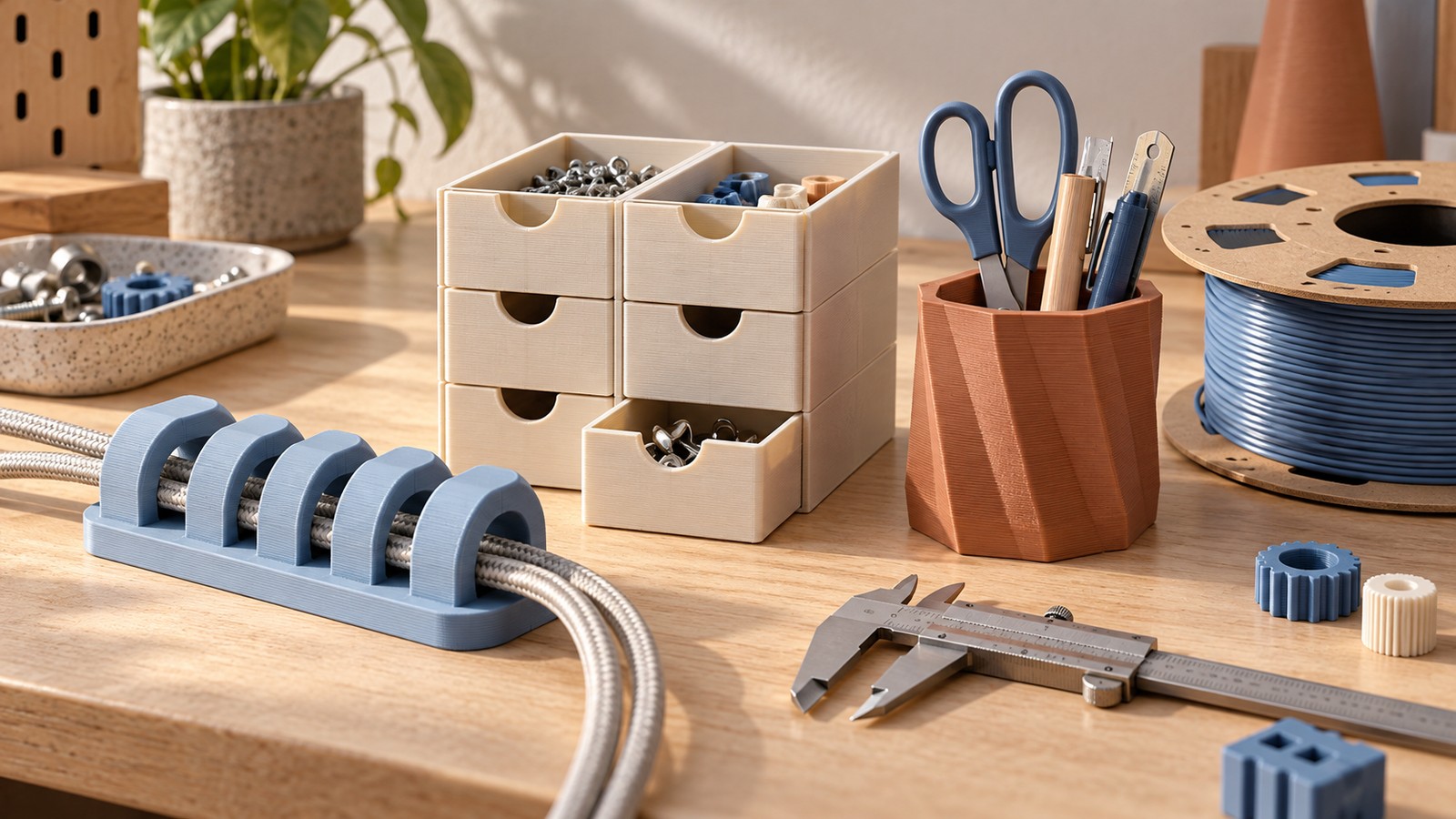
A cable guide, drawer divider, or simple holder is an easy way to understand the appeal. These are examples of possible projects, rather than a list of objects I am claiming to have printed. A ready-made item may be close to what you need; a printable model may let you change its dimensions.
My experience has been that community designs often provide a useful starting point. Finding a model still requires judgment. Check dimensions, printer compatibility, assembly instructions, and other makers’ comments before committing material and time. A successful print on someone else’s machine does not guarantee the same result on yours.
Printing can replace a purchase, but it is not automatically cheaper
Some items that would cost me $15 or $20 to buy can be made at home in a few hours. That is an observation about the kinds of purchases printing can replace, not a measured average saving or a promise for every project.
The comparison should include filament, supports and waste, failed attempts, electricity, extra hardware, and your time. The printer itself is also a substantial upfront purchase. If the bought product is stronger, safer, or ready immediately, buying it can be the better decision.
Before printing, ask: does this solve a real problem, will the material suit the environment, and would I still want it if it were not something I could print?
A practical first-project workflow
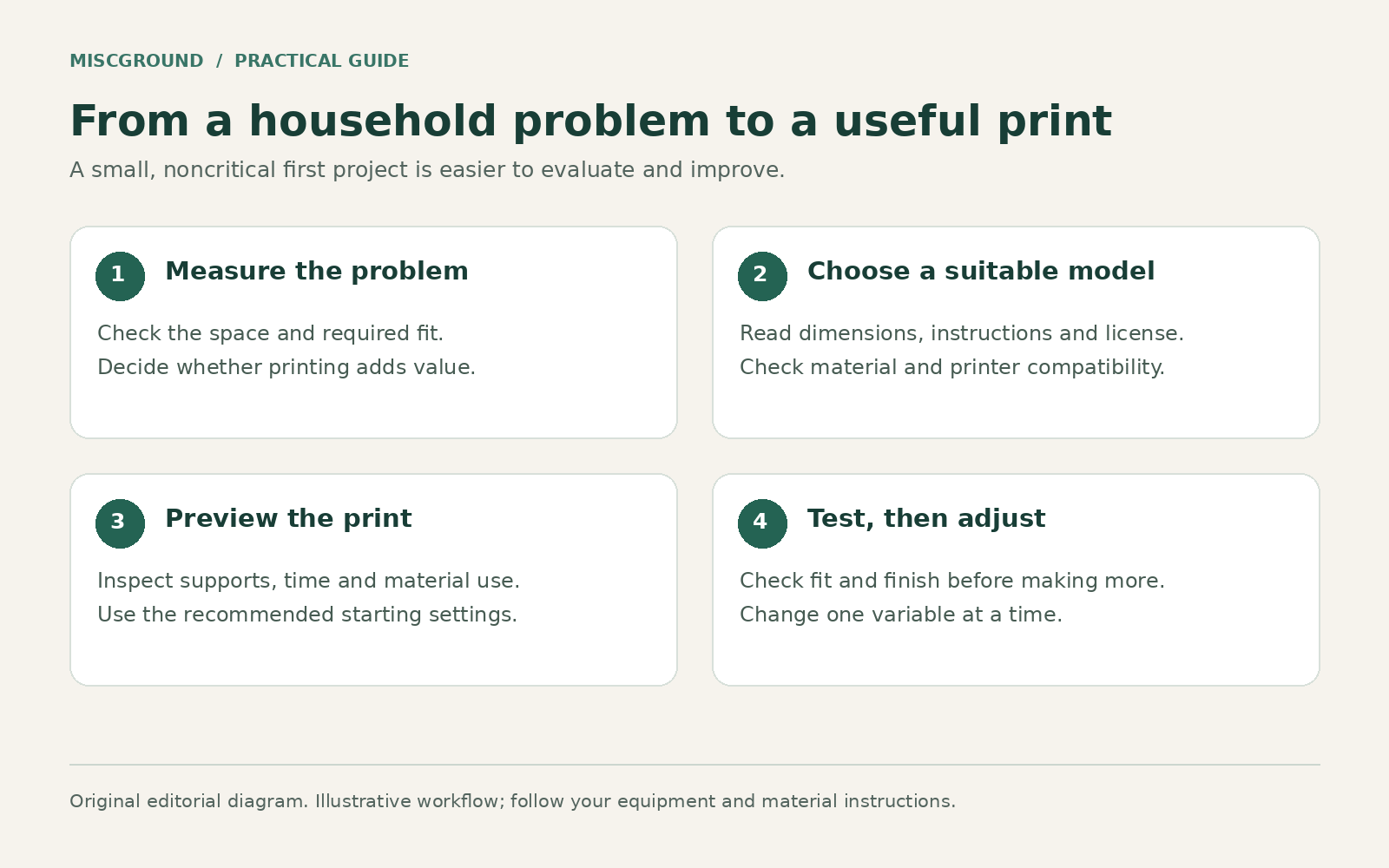
Original Miscground editorial diagram; a practical guide, not measured test results.
Start with a small, noncritical household object. Measure the space it needs to fit, choose a model with clear instructions, and read its license. Downloading a file does not automatically permit selling prints made from it.
Open the model in a compatible slicer and inspect the estimated material use, supports, and print time. Follow the printer and filament manufacturers’ settings. After printing, check fit and finish before making more copies. Change one dimension or setting at a time when troubleshooting.
The tradeoffs do not disappear
A printer needs a stable place to operate, room for supplies, and attention when prints fail. Noise and material odors can affect where it fits into a home. Heated plastic printing can release particles and volatile organic compounds; smell alone cannot establish whether exposure is safe.
NIOSH explains the exposure concerns and ways to reduce them. Plan suitable ventilation and source control rather than treating an enclosure as a complete solution. Keep children away from hot and moving parts. Homemade prints should not casually replace safety-critical parts, food-contact items, or objects a young child may mouth.
Who is likely to enjoy it?
A home printer makes more sense if you regularly notice small problems you would like to solve and do not mind learning through iteration. If you mainly want one finished object and have no interest in maintenance or settings, ordering that object may be more practical.
For me, the change has been having the option to make something when I need it. I plan to discuss my Bambu Lab P2S separately; this article is about the everyday value of printing, rather than a product test.
Cover: AI-generated conceptual illustration. It does not document the author’s home, actual prints, or a Bambu Lab P2S product. Body diagram: original Miscground graphic.